




Dynamic response prediction method of long-span road-rail suspension bridge based on LSTM
-
摘要: 大跨度公铁两用悬索桥结构健康监测系统由于输出的数据庞大、动态数据混杂,荷载与响应之间往往难以建立映射关系,导致工作人员无法采取合理的桥梁养维策略。以某大跨度公铁两用悬索桥为研究对象,对健康监测系统动力响应数据进行详细分析,基于长短期记忆(long short-term memory, LSTM)网络探究不同桥梁荷载因素(公路车辆、铁路车辆、温度、风速)下振动响应(加速度与挠度)的预测效果。分析结果表明:LSTM网络可有效预测此类桥梁的动力响应。桥梁挠度仅需温度荷载作为输入,进行10余次迭代即可准确预测;而桥梁垂向和横向振动加速度则需温度、风、公路和铁路荷载同时作为输入,进行约400次迭代才可准确预测。
-
关键词:
- 大跨度公铁两用悬索桥 /
- 振动 /
- 结构健康监测系统 /
- 长短期记忆神经网络
Abstract: For long-span road-rail suspension bridge, it is often difficult to establish a mapping relationship between loads and response due to the huge and mixed dynamic data output from the structural health monitoring system, thus hindering the adoption of reasonable maintenance strategies. A specific long-span road-rail suspension bridge was selected as the research subject. The dynamic response data from the health monitoring system were analyzed in detail, and the prediction performance of vibration responses (acceleration and deflection) under various loading factors (highway vehicles, railway vehicles, temperature, and wind speed) was investigated using the long short-term memory (LSTM) neural network method. The results indicate that the LSTM network can effectively predict the dynamic response of such bridges. Specifically, deflection can be predicted with only temperature load as input after slightly more than ten iterations, whereas vertical and lateral vibration acceleration require simultaneous inputs of temperature, wind, highway and railway loads and can be accurately predicted after approximately 400 iterations. -
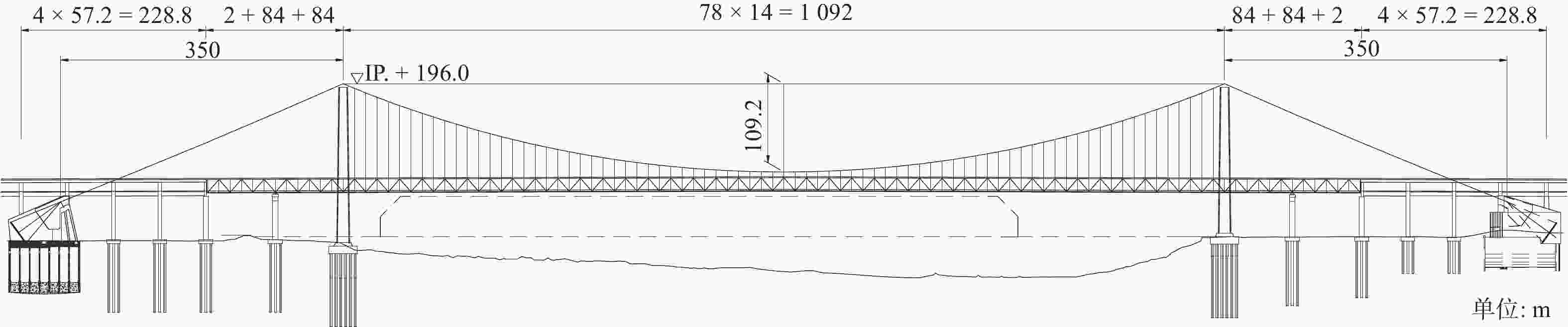
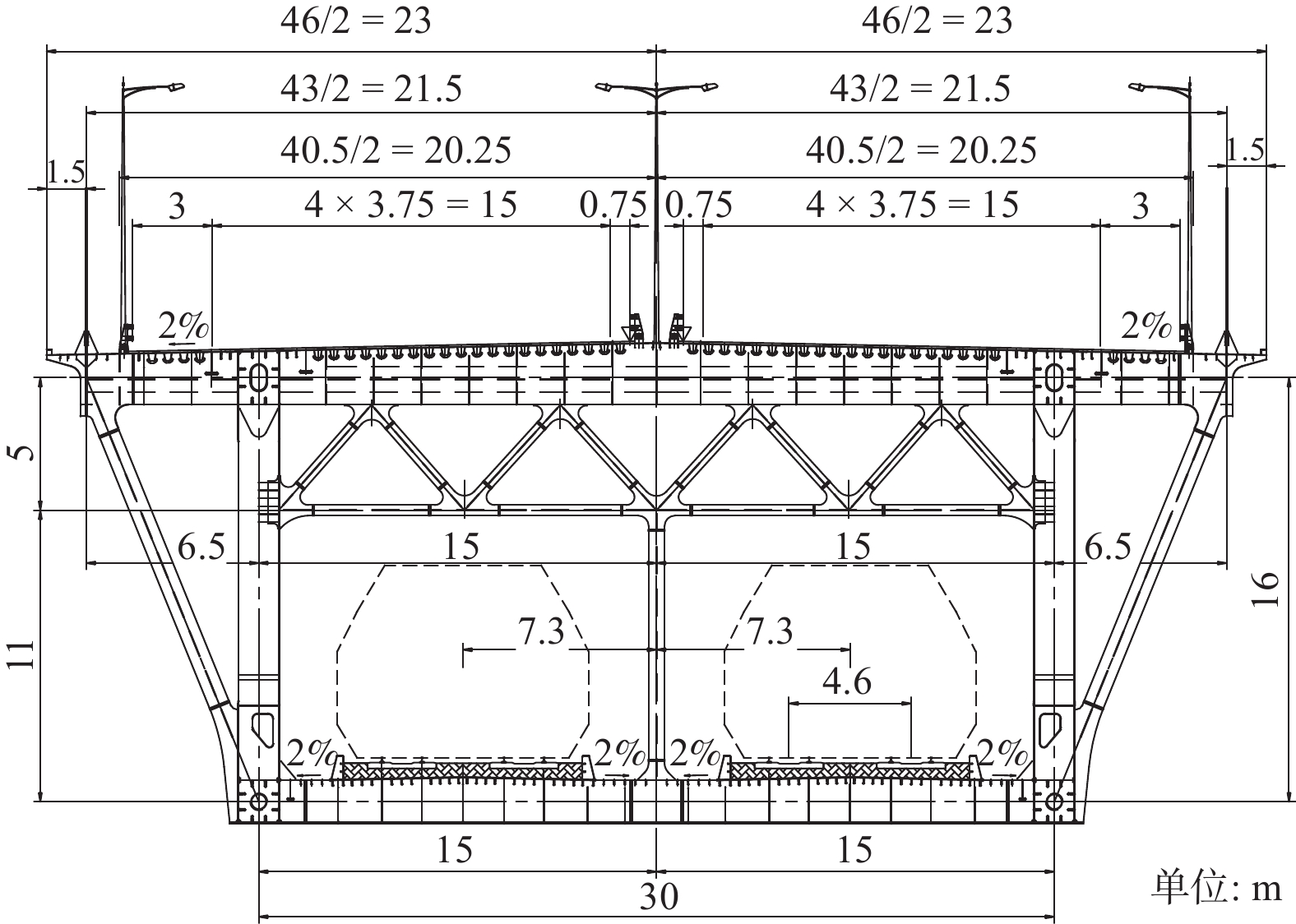
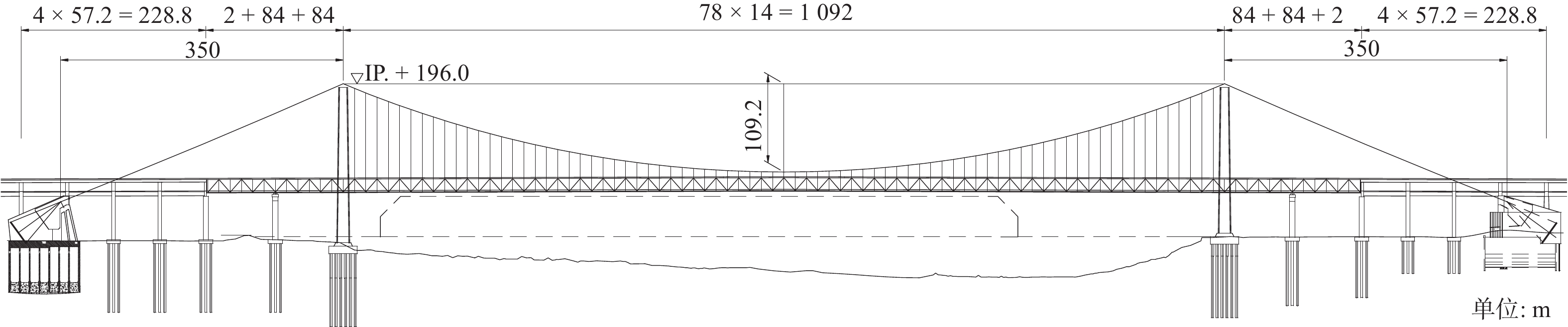
图 1 某千米级公铁两用钢桁悬索桥立面图
Figure 1. Elevation diagram of a road-rail steel-trussed suspension bridge spanning over 1 km
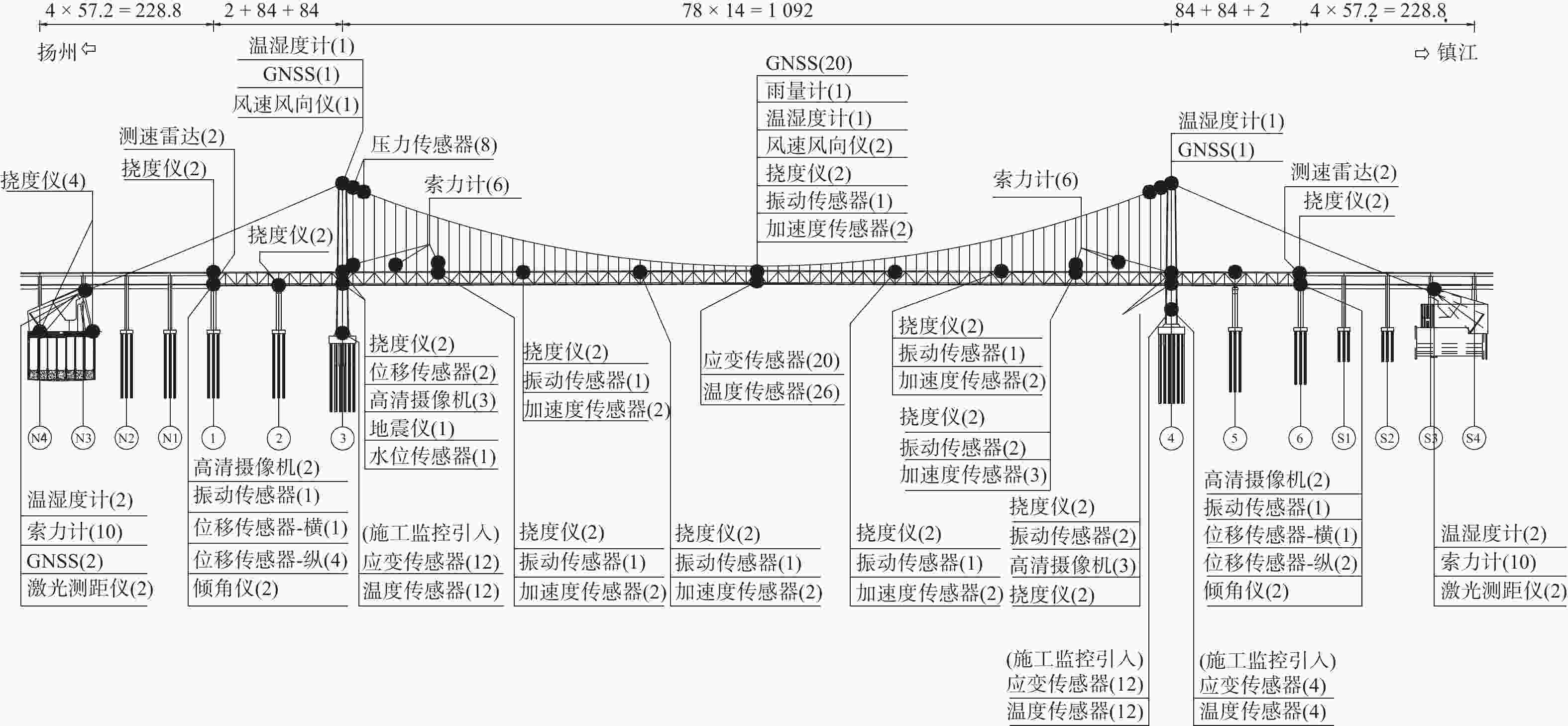
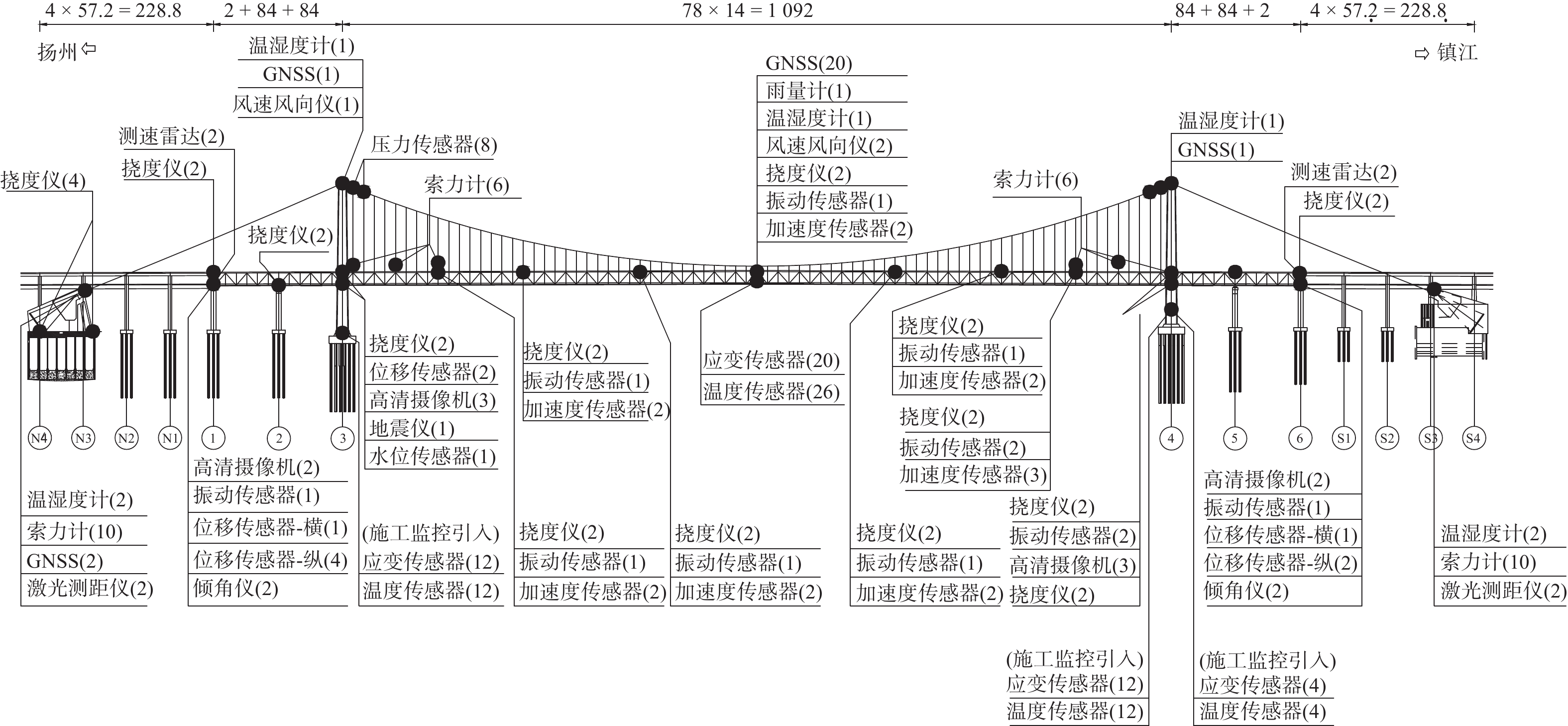
图 3 公铁两用悬索桥结构健康监测系统测点布置
Figure 3. Sensor placement for structural health monitoring system of road-rail suspension bridge
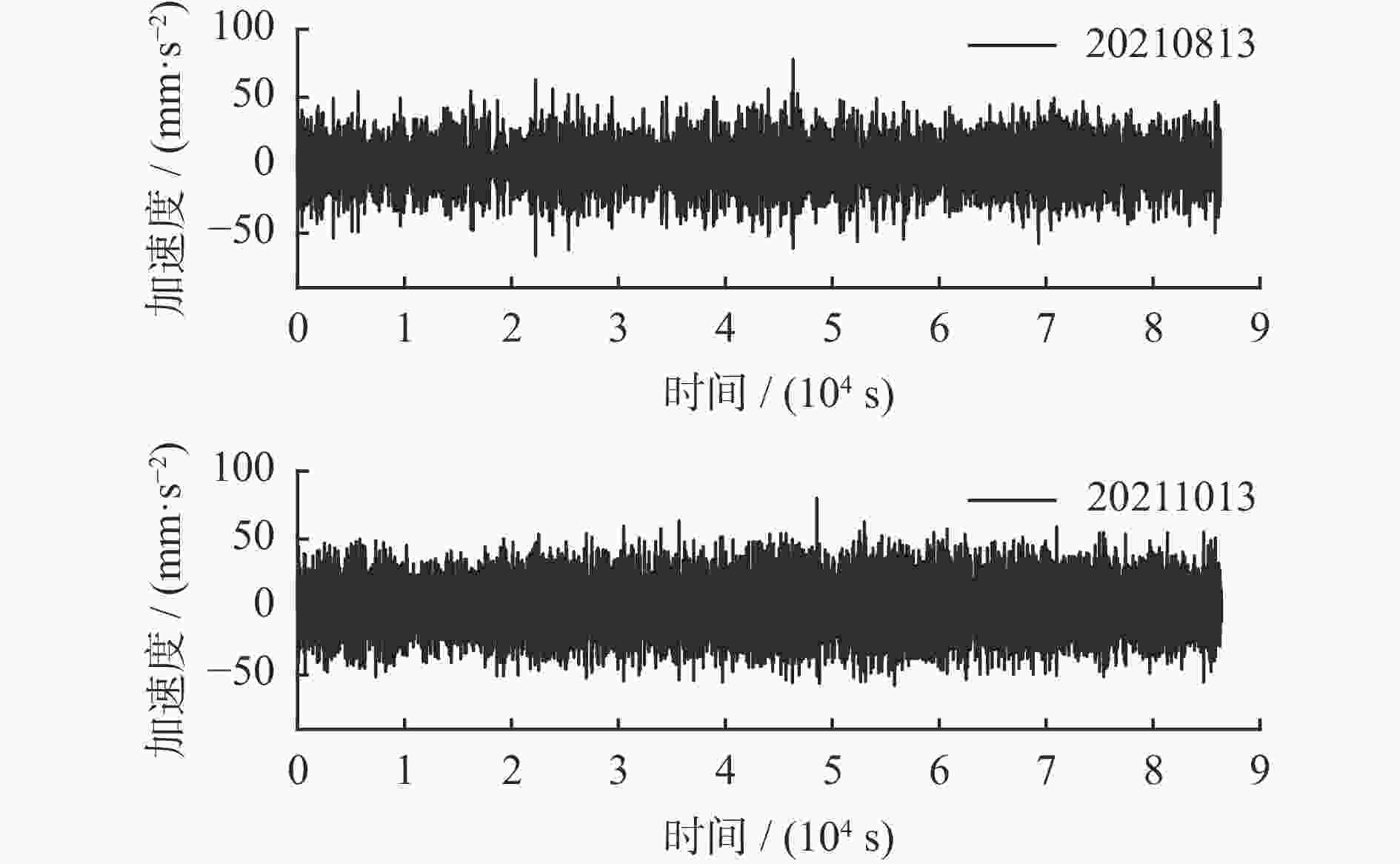
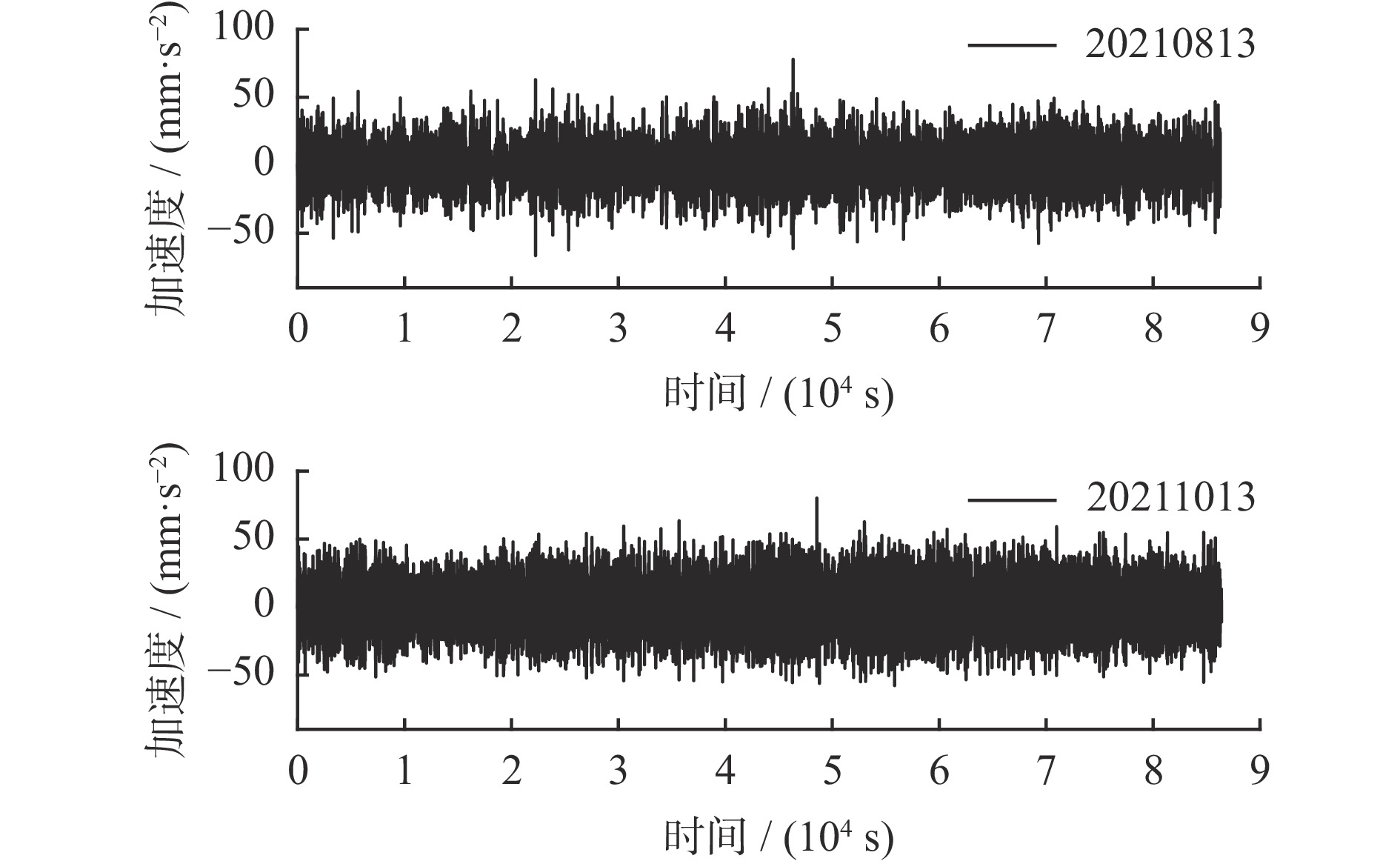
图 4 不同日期同一时间段下桥梁垂向加速度时程
Figure 4. Time histories of bridge vertical accelerations at the same time on different dates
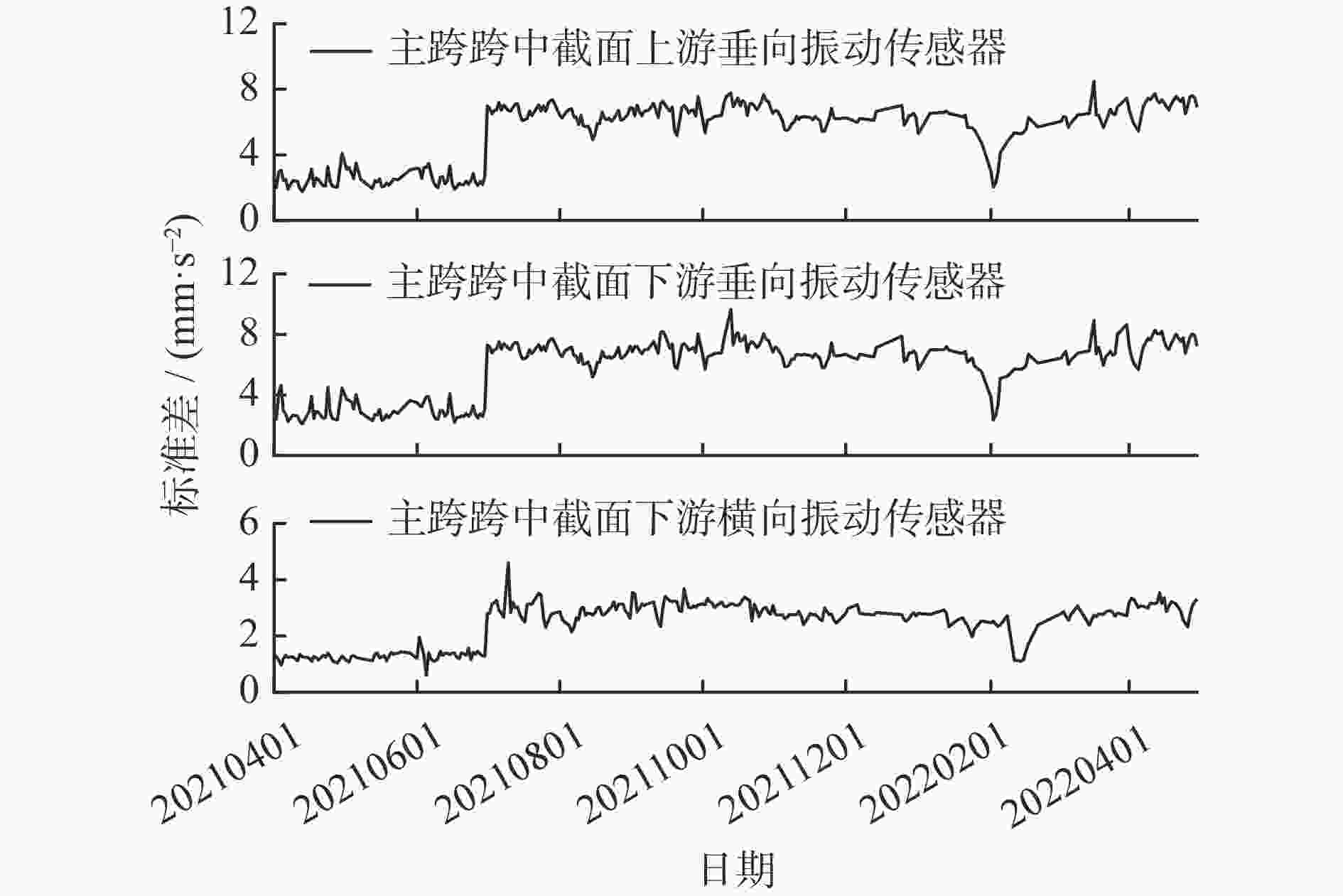
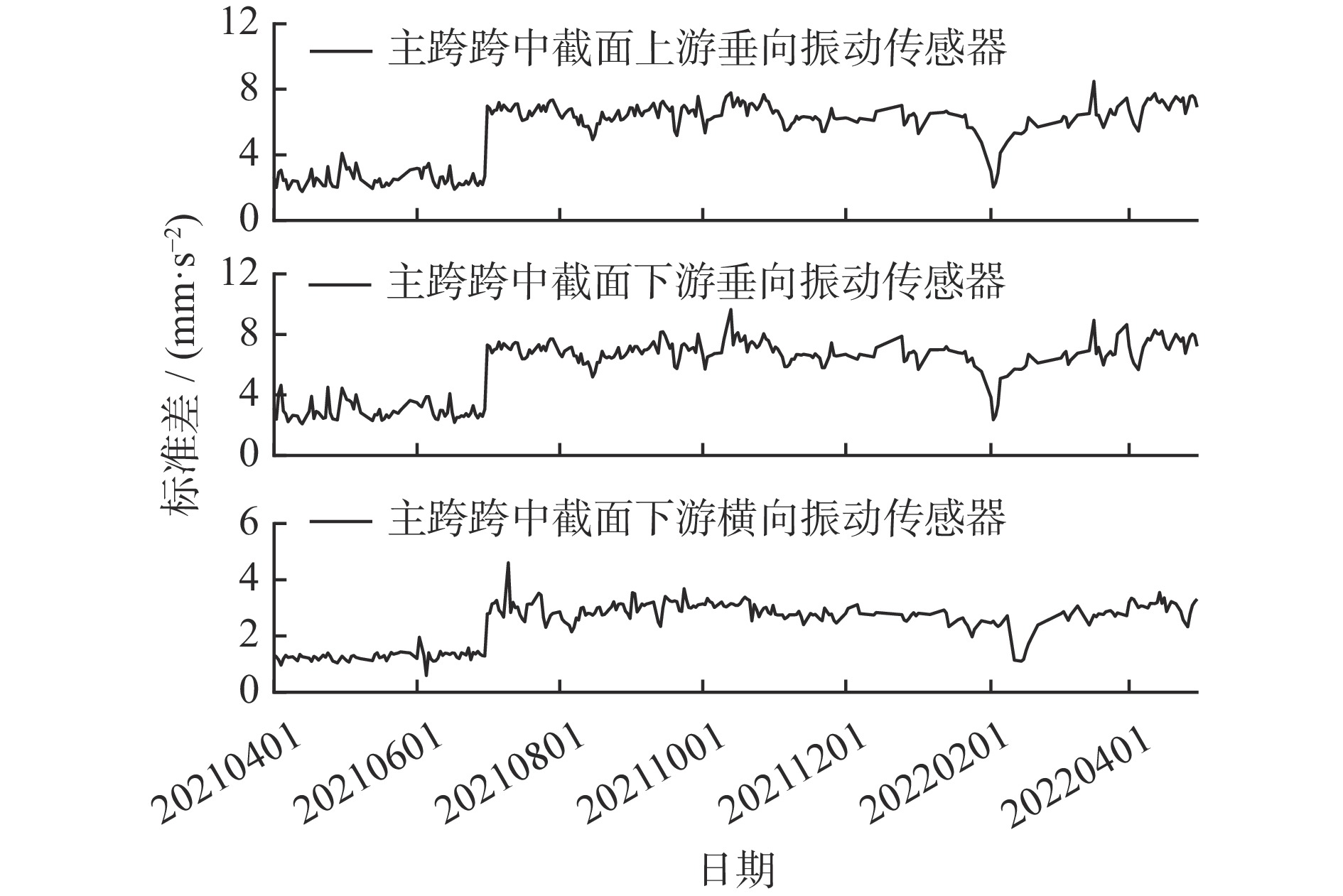
图 5 桥梁振动加速度日标准差年度变化情况
Figure 5. Annual variation of daily standard deviation of bridge vibration acceleration
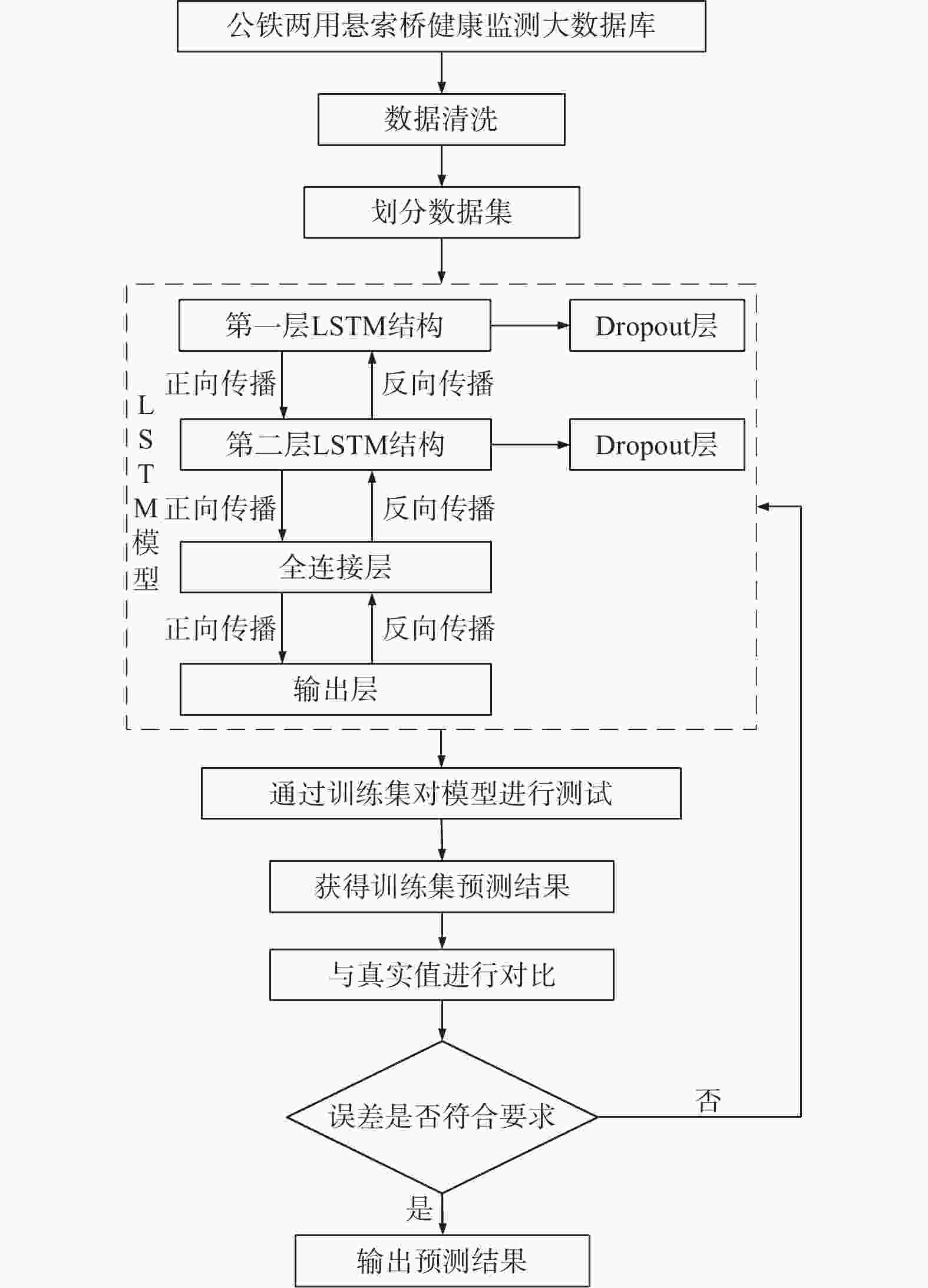
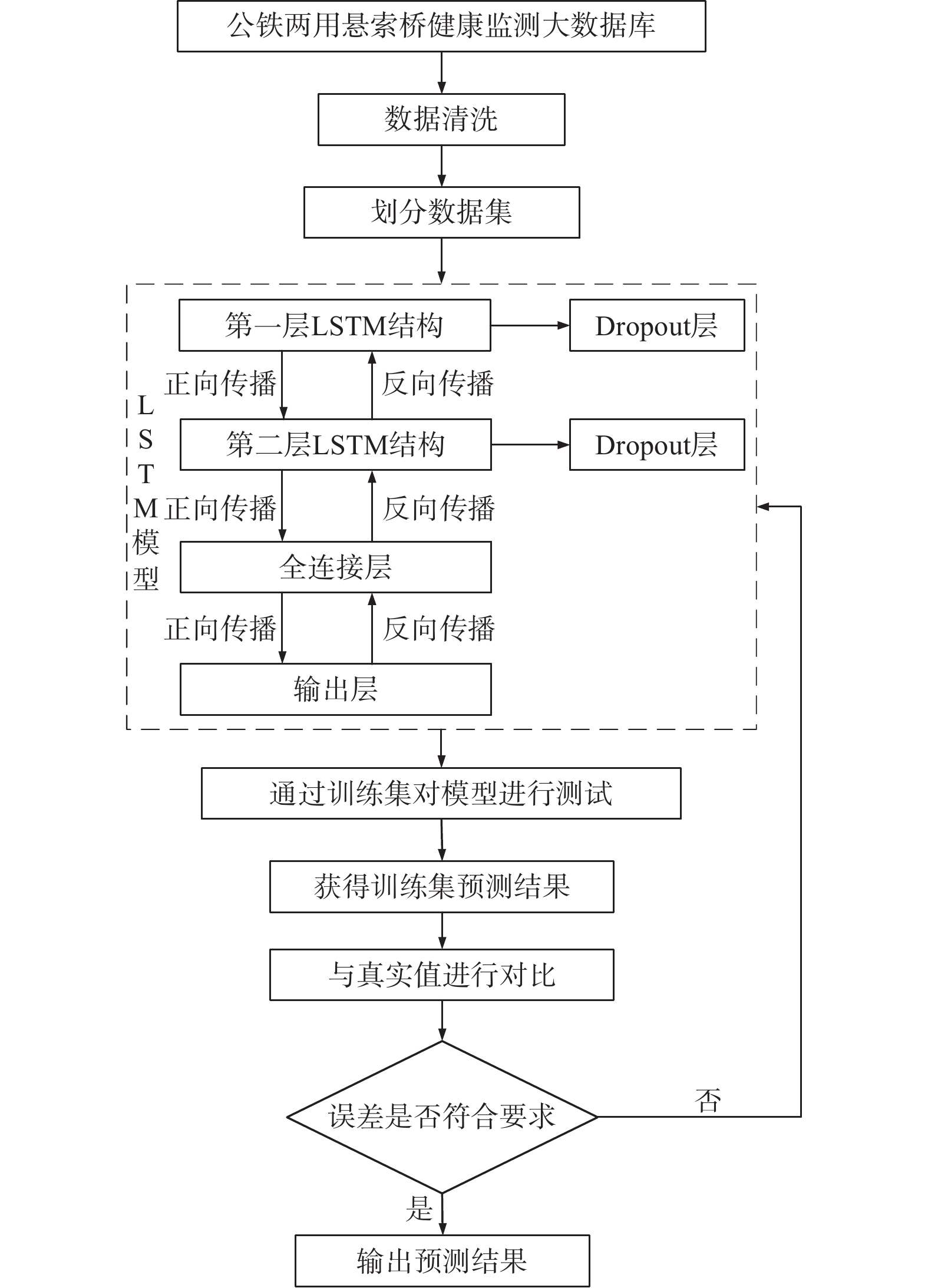
图 6 基于LSTM的公铁两用悬索桥振动预测框架
Figure 6. LSTM-based vibration prediction framework for road-rail suspension bridge
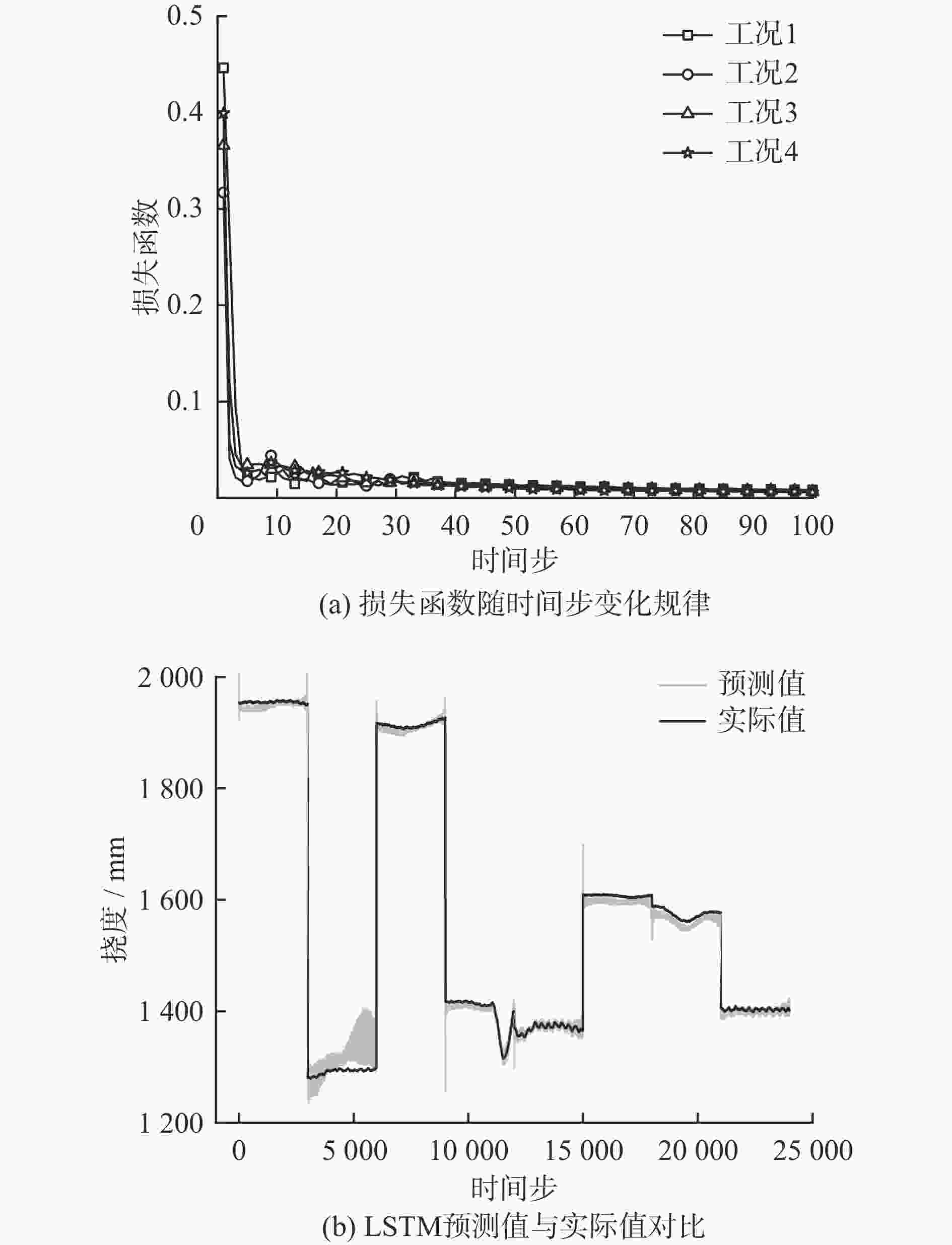
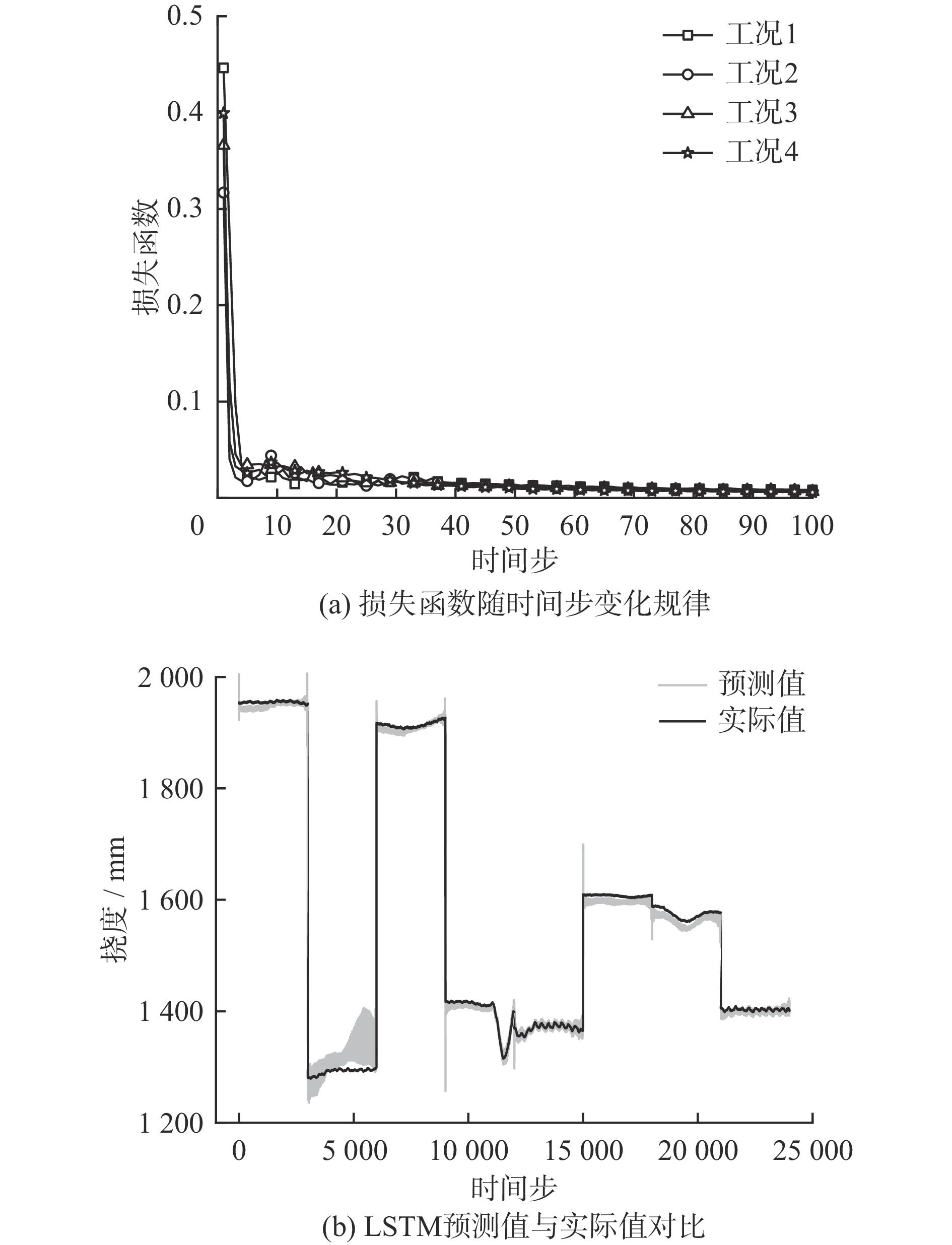
图 7 非天窗期桥梁主跨挠度预测情况
Figure 7. Predicted main span deflection of bridge during non-maintenance periods
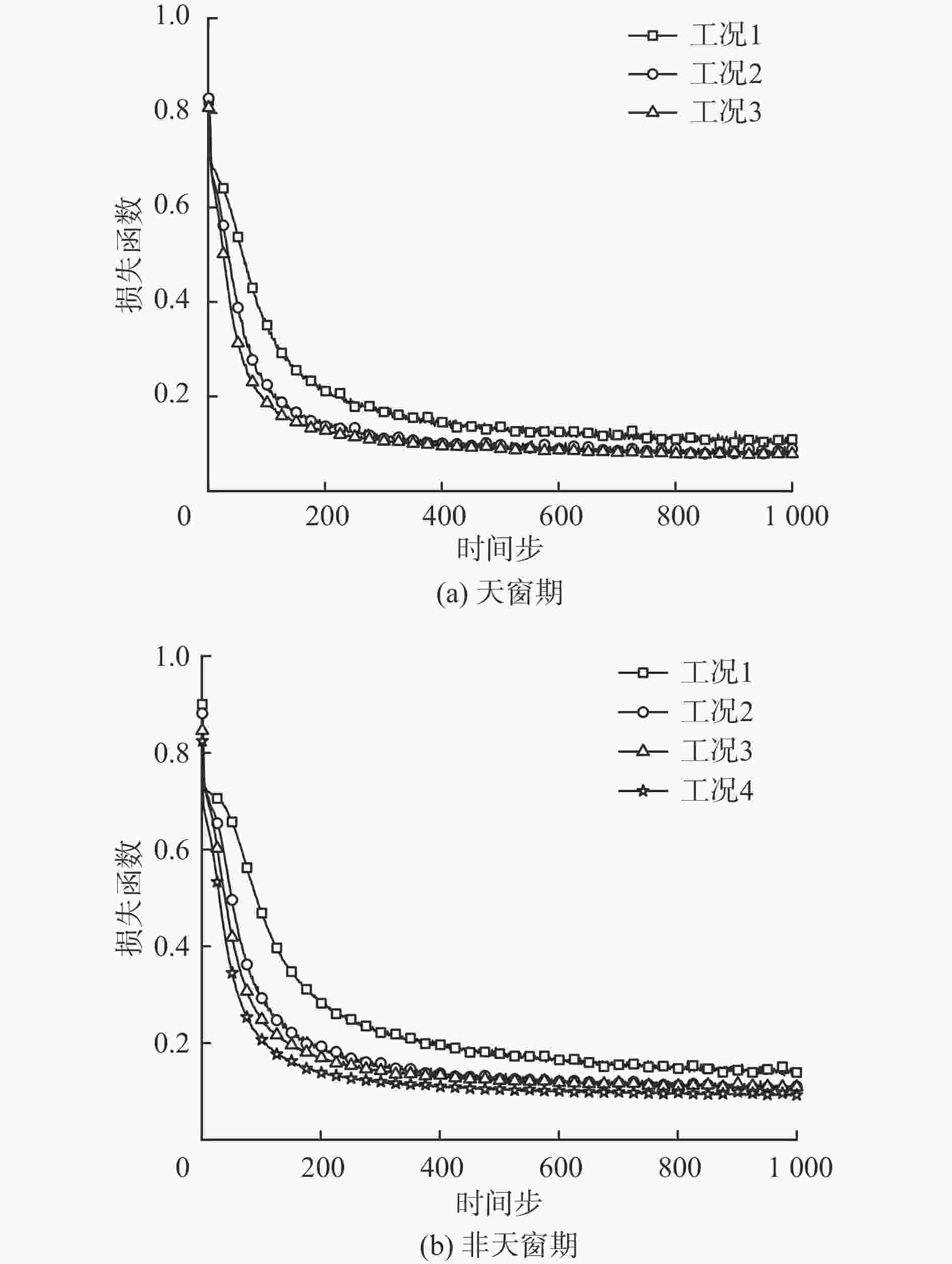
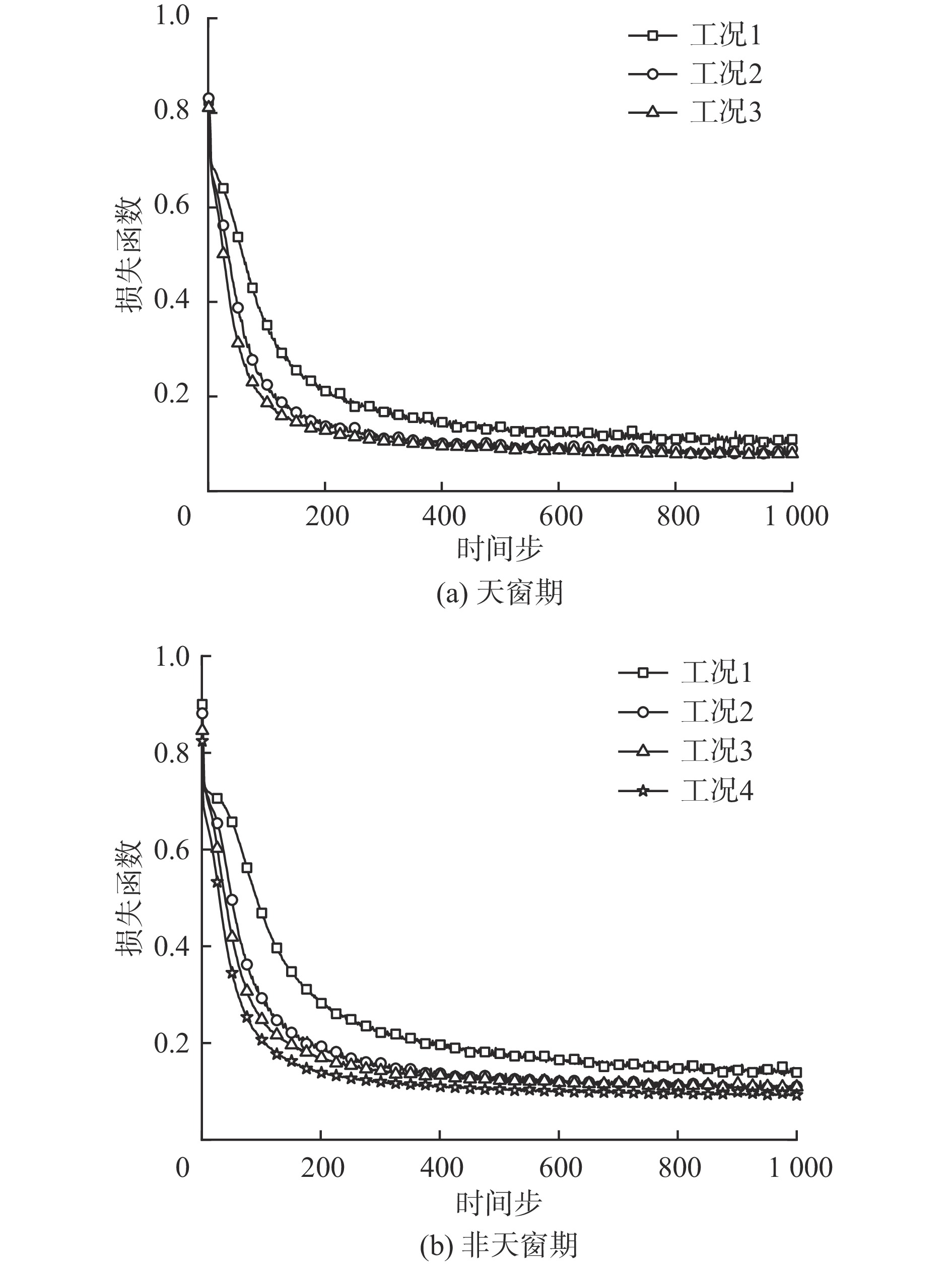
图 8 桥梁加速度预测中损失函数随训练轮次变化规律
Figure 8. Variation of loss during epochs in predicting bridges accelerations
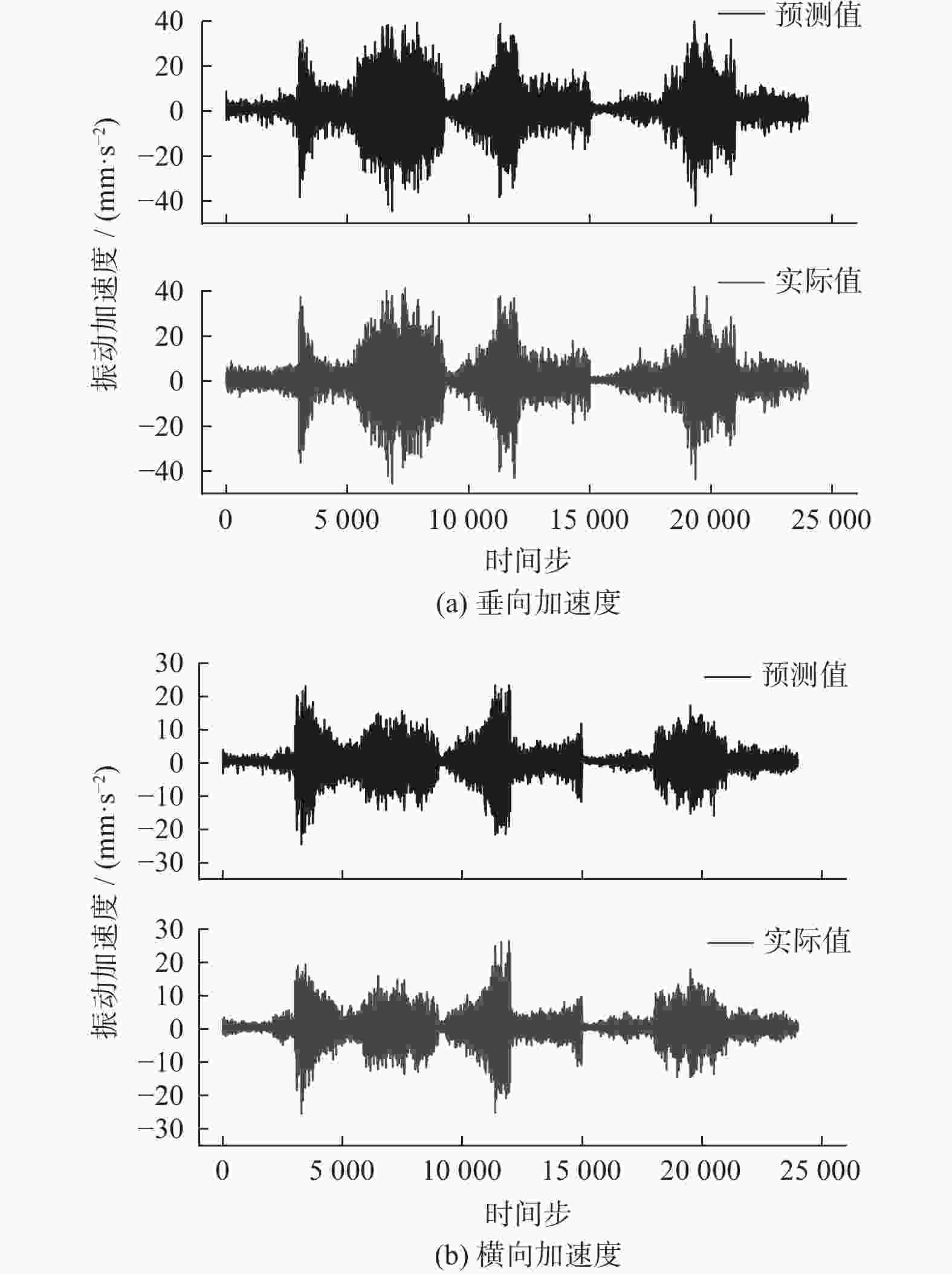
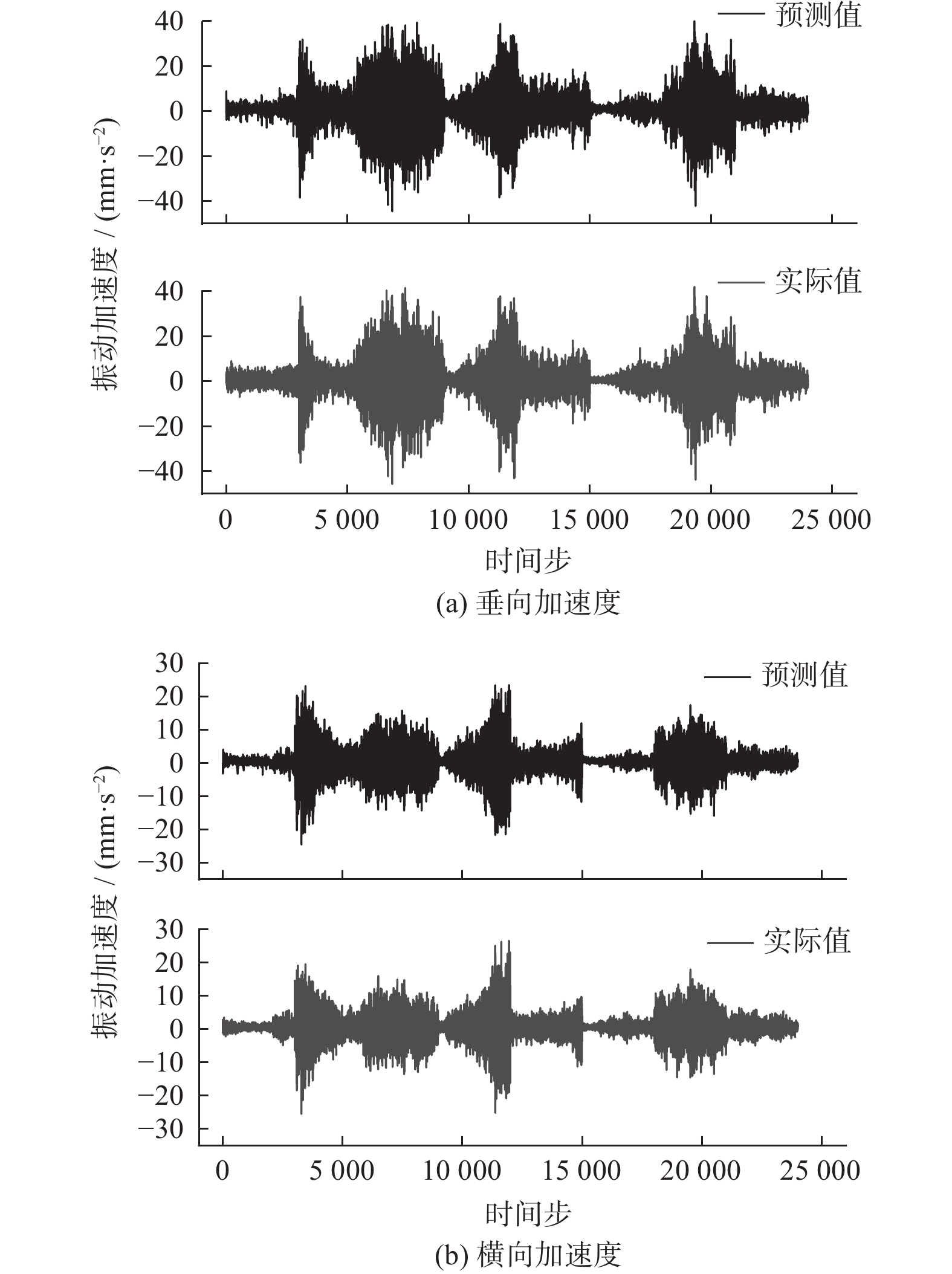
图 9 非天窗期桥梁加速度预测效果
Figure 9. Prediction performance of bridge acceleration during non-maintenance periods
表 1 荷载组合工况
Table 1. Load combination cases
时段 工况编号 荷载组合工况 非天窗期 工况1 温度荷载 工况2 温度荷载 + 风荷载 工况3 温度荷载 + 风荷载 + 公路车辆荷载 工况4 温度荷载 + 风荷载 + 公路车辆荷载 + 铁路列车荷载 天窗期 工况1 温度荷载 工况2 温度荷载 + 风荷载 工况3 温度荷载 + 风荷载 + 公路车辆荷载  下载: 导出CSV
-
[1] 刘勇, 晏万里, 殷新锋. 大跨度悬索桥车—桥耦合振动建模及构件受力分析[J] . 公路与汽运, 2022(1): 139 − 141, 154. [2] 逄焕平, 王建国, 钱锋. 大跨度悬索桥的车桥耦合振动分析[J] . 合肥工业大学学报(自然科学版), 2011, 34(1): 114 − 118. [3] 邹明伟. 大跨度钢桁梁悬索桥气动参数研究与抖振时域分析[D] . 成都: 西南交通大学, 2018. [4] 鞠金来. 强风作用下超大跨度公铁两用悬索桥列车走行性研究[D] . 长沙: 中南大学, 2022. [5] 王少钦, 马骎, 任艳荣, 等. 主跨 1120 m铁路悬索桥风-车-桥耦合振动响应分析[J] . 铁道科学与工程学报, 2017, 14(6): 1241 − 1248. doi: 10.19713/j.cnki.43-1423/u.2017.06.017[6] 夏禾, 徐幼麟, 阎全胜. 大跨度悬索桥在风与列车荷载同时作用下的动力响应分析[J] . 铁道学报, 2002, 24(4): 83 − 91. [7] 李永乐, 董世赋, 臧瑜, 等. 大跨度公轨两用悬索桥风-车-桥耦合振动及抗风行车准则研究[J] . 工程力学, 2012, 29(12): 114 − 120. [8] 王天宇. 基于深度学习的地震和车辆荷载作用下桥梁动力响应预测研究[D] . 南京: 东南大学, 2022. [9] Dong F H. Virtual reality research on vibration characteristics of long-span bridges with considering vehicle and wind loads based on neural networks and finite element method[J] . Neural Computing and Applications, 2018, 29(5): 1303 − 1309. doi: 10.1007/s00521-017-2861-7 [10] 谢诚朗. 基于LSTM模型的斜拉桥风致加速度预测[D] . 广州: 广州大学, 2023. [11] 翟晓春. 基于BP神经网络的斜拉桥车桥耦合振动响应预测[J] . 西部交通科技, 2023(8): 147 − 150. [12] 薛桂香, 苗敬礼, 张丹, 等. 基于VMD-CNN-BiLSTM人工智能算法的节段拼装自复位桥梁地震响应预测方法[J] . 中国公路学报, 2025, 38(7): 75 − 86. [13] 庞振浩. 中小跨径铁路桥梁车致动力响应动态预测方法研究[D] . 南京: 东南大学, 2023. [14] 毛莹莹. 基于BP神经网络的大跨度悬索桥车桥耦合振动分析[J] . 山东交通科技, 2022(5): 94 − 96. [15] Zhu D M, Zhang J X, Wu Q, et al. Predictive capabilities of data-driven machine learning techniques on wave-bridge interactions[J] . Applied Ocean Research, 2023, 137: 103597. doi: 10.1016/j.apor.2023.103597 -

 下载:
下载:

 点击查看大图
计量
- 文章访问数: 146
- HTML全文浏览量: 90
- PDF下载量: 32
- 被引次数: 0
