




Optimization design of intersection traffic organization based on Growth-TRRL algorithm
-
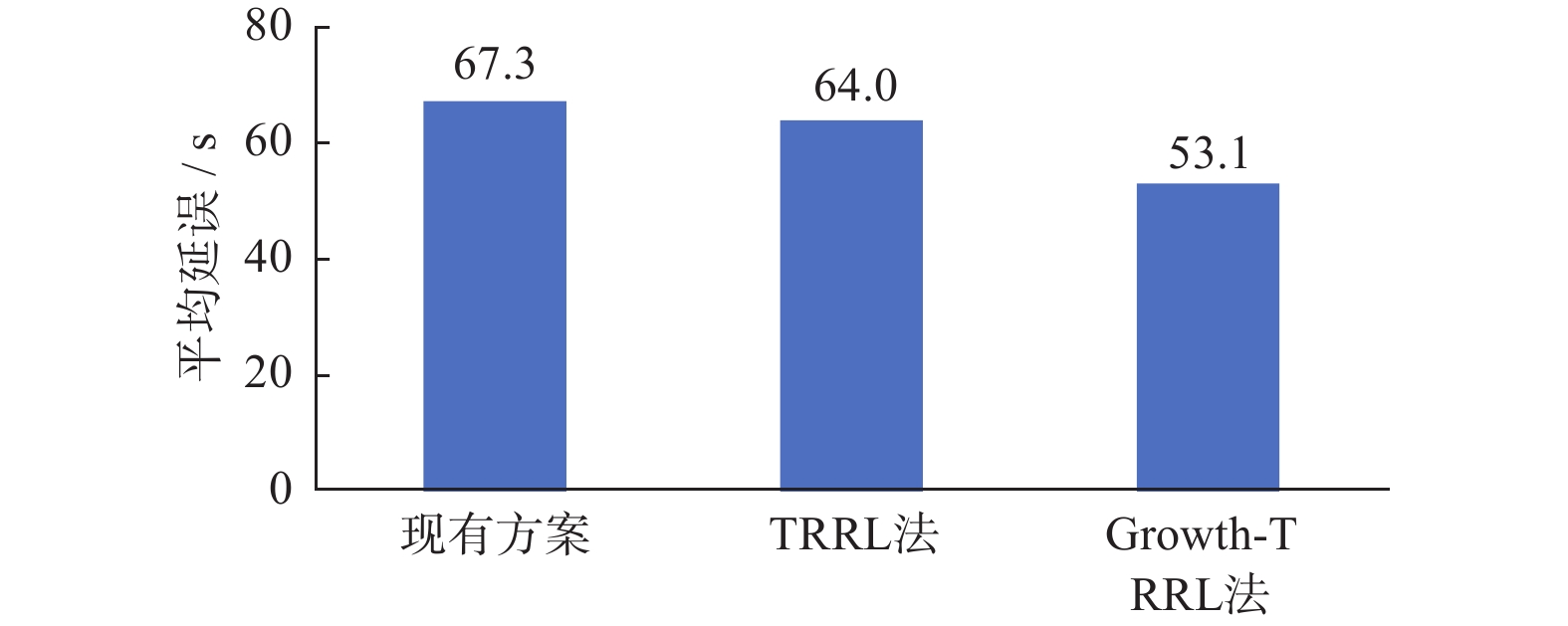
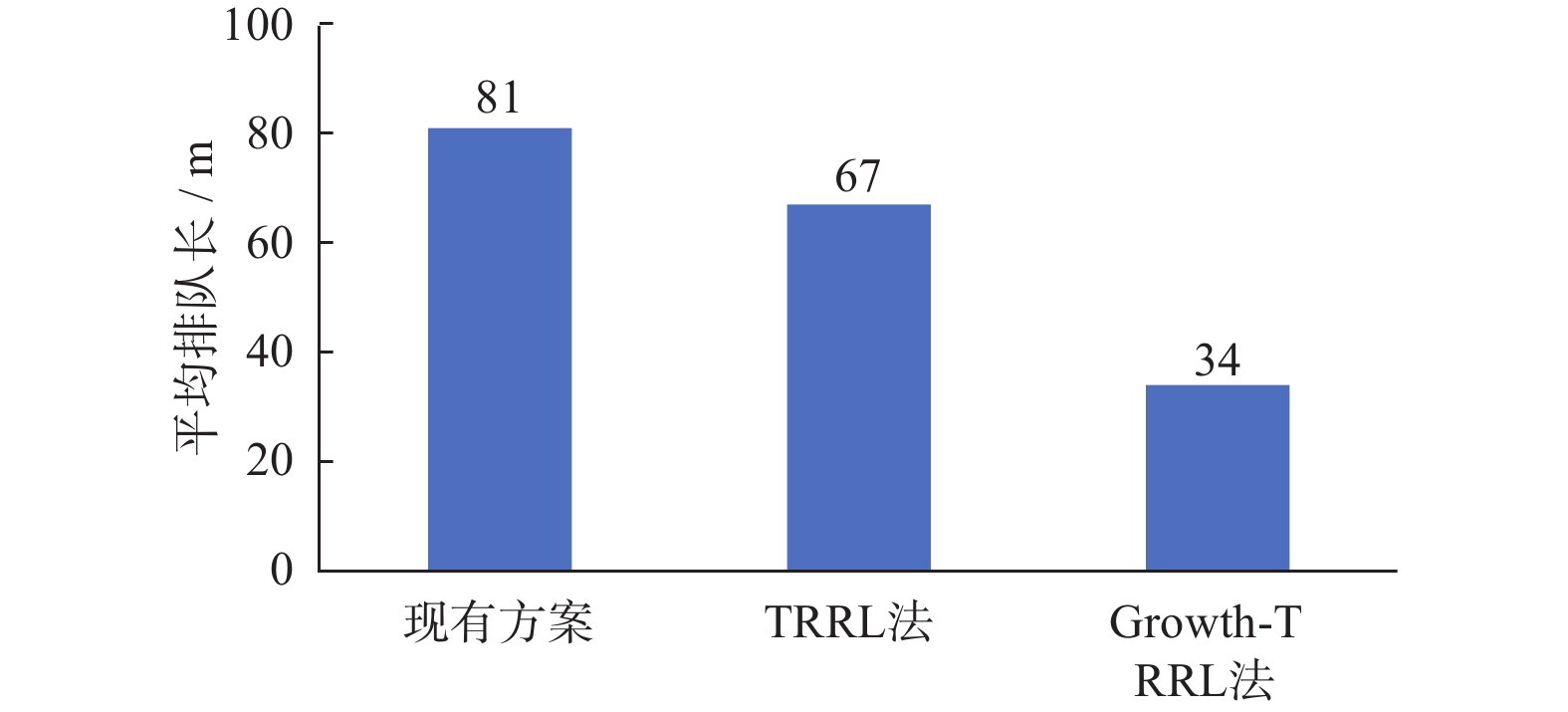
摘要: 交叉口渠化和信号配时不当导致交通问题频发,其解决的关键在于对特定交叉口进行交通组织优化设计。首先,提出一种引入爬山法改进TRRL的新算法Growth-TRRL,运用改进算法迭代搜索最优信号周期;其次,实地调研郑州人民路与商城路交叉口数据,将该数据代入Growth-TRRL算法对道路交叉口进行渠化和信号周期配时优化;最后,通过VISSIM建模与仿真,以车辆延误、排队长度等指标验证优化方案的准确性,对优化效果进行详细分析。研究结果表明:优化后的方案可使车辆延误减少66.3%,平均排队长度缩短58.0%,交叉口通行效率显著提高,交叉口的拥堵状况得到有效缓解。Abstract: Traffic problems frequently occur due to improper intersection channelization and signal timing. The key to resolving these issues lies in optimizing the traffic organization design for specific intersections. Firstly, a new algorithm, Growth-TRRL, was proposed to improve TRRL by introducing the hill climbing method, and this improved algorithm was used to search for the optimal signal period iteratively. Secondly, the intersection data of Renmin Road and Shangcheng Road in Zhengzhou were collected and input into the Growth-TRRL algorithm to optimize the channelization and signal period timing of the intersection. Finally, VISSIM modeling and simulation were conducted to verify the accuracy of the optimization scheme, using vehicle delay and queue length as evaluation indicators, and the optimization performance was analyzed in detail. The results show that the optimized scheme can reduce vehicle delay time by 66.3%, shorten average queue length by 58.0%, significantly improve intersection traffic efficiency, and effectively alleviate congestion.
-
表 1 各类进口车道的基本饱和流量Sbi
Table 1. Basic saturated flow of all types of inlet lanes
车道 Sbi 直行车道/(pcu·h−1) 1 550 ~ 1 750,平均1 650 右转车道/(pcu·h−1) 1 350 ~ 1 650,平均1 450 左转车道/(pcu·h−1) 1 450 ~ 1 650,平均1 550  下载: 导出CSV
表 2 左、右转弯车道饱和流量的转弯半径校正系数
Table 2. Correction coefficients of turning radius for saturated flow in left and right turning lanes
转弯半径/m 10 15 20 25 30 fr 0.90 0.95 0.97 1.00 1.00
下载: 导出CSV
表 3 Growth-TRRL算法伪代码
Table 3. Growth-TRRL algorithm pseudo-code
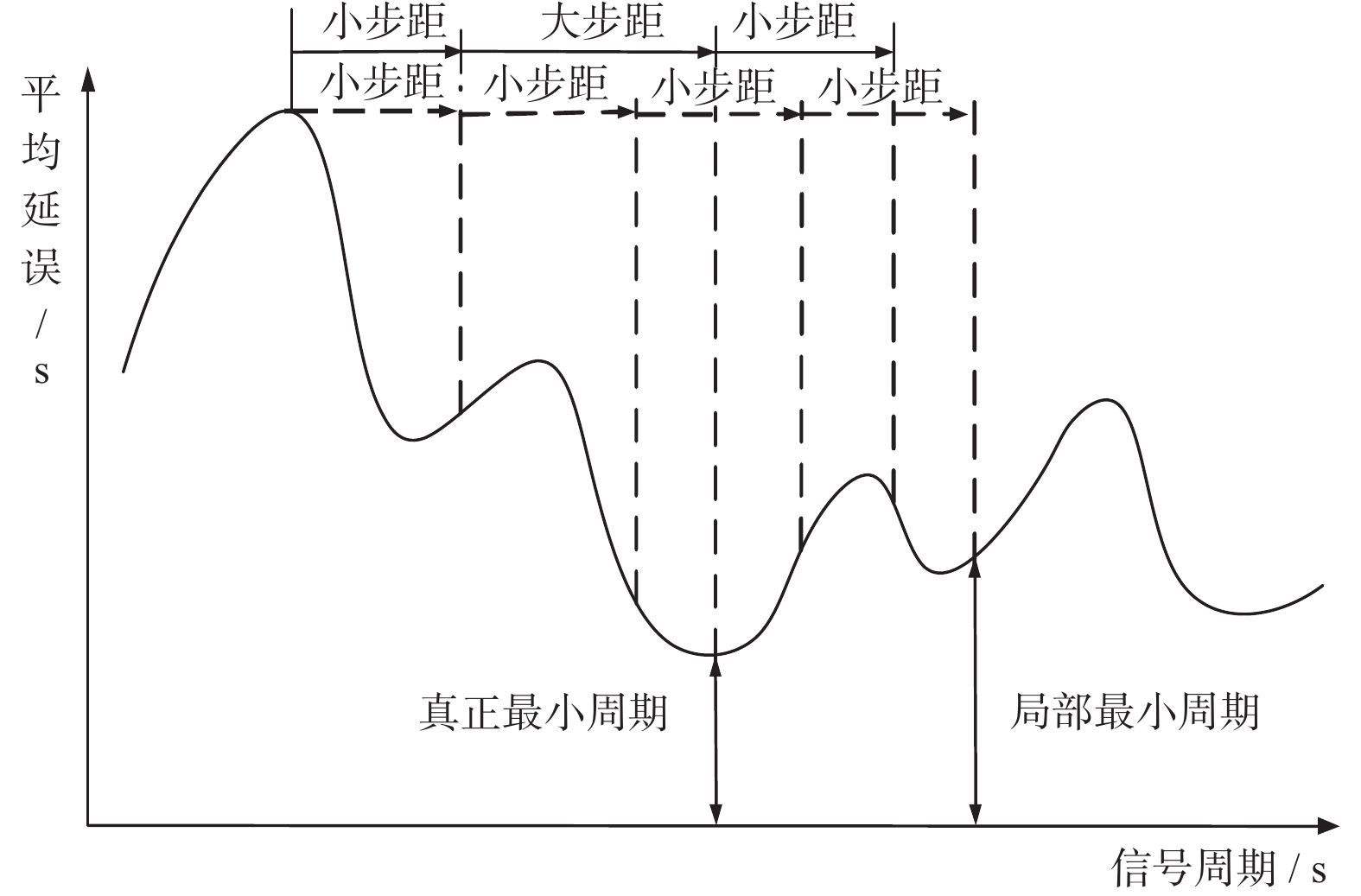
算法1:基于Growth-TRRL算法调整步长的伪代码 输入:初始信号周期 T0,步长 ΔT,最大迭代次数 Iter_max,收敛阈值ε
输出:最优信号周期 T*
1: 初始化信号周期 Tk = T0
2: for k = 1 to Iter_max do
3: 计算当前信号周期下的目标函数值 F(Tk)
4: if F(Tk) < F(Tk-1) then
5: ΔT = ΔT * 增大步长因子
6: else
7: ΔT = ΔT * 减小步长因子
8: Tk + 1 = Tk + ΔT
9: 计算新信号周期下的目标函数值 F(Tk + 1)
10: if abs(F(Tk + 1) - F(Tk)) < ε then
11: T* = Tk + 1
12: break
13: Tk = Tk + 1
14: 输出最优信号周期 T*
下载: 导出CSV
表 4 交叉口配时所需数据表
Table 4. Data required for intersection timing
进口 流向 流量/ (pcu·h−1) 饱和流量 /(pcu·h−1) 流量比 东 左转 182 1 194 0.152 4 右转 154 1 378 0.111 8 西 左转 672 1 519 0.221 2 直行 317 1 518 0.244 4 直右 317 1 419 0.261 5 南 直行 954 1 502 0.211 7 直右 318 1 502 0.211 7 北 左转 392 1 488 0.131 7 直行 728 1 485 0.245 1
下载: 导出CSV
表 5 各周期平均延误
Table 5. Average delay by cycle
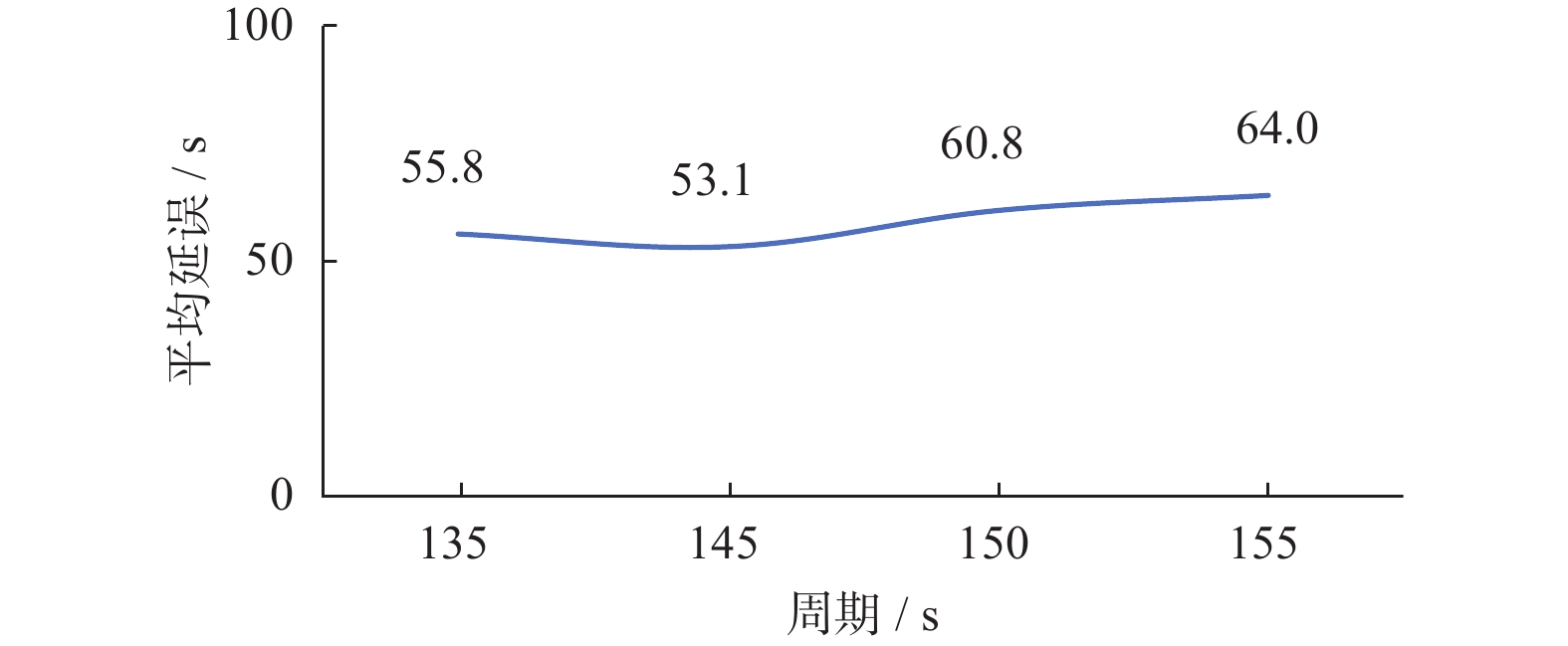
单位:s 周期 135 145 155 165 175 平均延误 55.8 53.1 64.0 60.3 66.8
下载: 导出CSV
-
[1] Suh W, Hunter M P. Signal design for displaced left-turn intersection using Monte Carlo method[J] . KSCE Journal of Civil Engineering, 2014, 18(4): 1140 − 1149. doi: 10.1007/s12205-014-0225-8 [2] 阳兰. 对城市道路交叉口交通组织优化设计的分析[J] . 城市道桥与防洪, 2014(6): 18 − 20, 27. doi: 10.3969/j.issn.1674-8050.2024.14.017 [3] 张伟玲. 城市道路平面交叉口交通组织方案分析[J] . 交通世界, 2019(25): 4 − 5, 9. doi: 10.16248/j.cnki.11-3723/u.2019.25.001 [4] 李斌. 城市道路平面交叉口交通组织与渠化设计分析[J] . 建材与装饰, 2020(5): 252 − 253. [5] 刘艳茹. 城市道路交叉口交通组织优化设计[J] . 城市建筑, 2021, 18(5): 190 − 192. [6] 孙艳磊. 道路交通组织优化分析[J] . 数字化用户, 2022, 28(37): 252 − 254. [7] 姬利娜, 晏永廷, 晏子. 城市道路平面交叉口交通组织优化设计[J] . 交通工程, 2022, 22(1): 60 − 66. [8] 王爽, 陈伟伟, 刘孟龙, 等. 基于Webster原理的中小城镇道路交叉口组织优化及信号控制[J] . 工程技术研究, 2022, 7(19): 7 − 9. [9] 薄雾, 龚栩, 罗率天, 等. 韦伯斯特算法在不同流量下的排队延误优化效果[J] . 运输经理世界, 2024(1): 164 − 166. [10] 巴天星, 孟子悦, 于时泽. 基于Webster法的交叉口配时优化方法应用研究[J] . 人民公交, 2024(12): 49 − 51. doi: 10.3969/j.issn.1674-8050.2024.12.014 [11] 韩印, 邢冰, 姚佼, 等. 混合交通流条件下区域交通信号控制优化模型[J] . 交通运输工程学报, 2015, 15(1): 119 − 126. doi: 10.3969/j.issn.1671-1637.2015.01.016 [12] 于杰. 考虑公交优先的改进韦伯斯特信号配时模型研究[D] . 南京: 东南大学, 2015. [13] 唐远, 杨天塘, 陈保安. 城市道路交叉口交通组织优化与评估[J] . 山西交通科技, 2021(5): 91 − 95. doi: 10.13986/j.cnki.jote.2024.04.007 [14] 张羽佳. 矿区进场道路交通组织与管理[J] . 内蒙古公路与运输, 2023(1): 53 − 57. doi: 10.19332/j.cnki.1005-0574.2023.01.012 [15] 周海娟. 基于VISSIM仿真的城市信号交叉口交通组织优化研究[D] . 西安: 长安大学, 2015. -
 24-0381FL.pdf

-

 下载:
下载:

 点击查看大图
计量
- 文章访问数: 253
- HTML全文浏览量: 154
- PDF下载量: 37
- 被引次数: 0
