




Research on reliability evaluation method for sensor signals in data reinjection system
-
摘要: 智驾系统测试系统是智驾研究的重点,其中用于回注的感知层传感器信号必须可靠有效。针对单一误差指标进行横向对比的客观性不足,提出一种基于裕度与不确定度量化(quantification of margins and uncertainties, QMU)的传感器信号回注可靠性评估方法。基于QMU核心原理,首先结合评价阈值建立可靠性评估通路。其次,对数据回注系统传感器提出一套基于序关系法(G1法)和不确定性比例因子的综合模糊评价体系与评价流程,并据此得出测试结果。最后在仿真软件中搭建测试场景,对域控制器接收到的毫米波雷达与激光雷达的回注信号进行评估。结果表明:实测数据中,激光雷达最大高程误差、XY向平面误差、X向平面误差、Y向平面误差特性值分别为2.89、0.45、1.063、0.65,综合评价结果为2.82,毫米波雷达的测距、测角、测速特性值为
2.1429 、1.5306 、1.1705 。本研究所提方法的综合评价结果为1.467,实现了对传感器回注系统的深度评估和客观量化。Abstract: The test system for an intelligent driving system is a research priority of intelligent driving, where the perception layer sensor signal used for reinjection must be reliable and effective. To address the insufficient objectivity of horizontal comparison using a single error index, a reliability evaluation method for sensor signal reinjection based on quantification of margins and uncertainties (QMU) was proposed. Based on the core principle of QMU, a reliability evaluation pathway was first established by incorporating evaluation thresholds. Subsequently, a comprehensive fuzzy evaluation system and process, integrating the order relation method (G1) and an uncertainty scale factor, were developed for sensors in the data reinjection system, from which the test results were derived. Finally, a test scenario was built in the simulation software, and the reinjection signals of the millimeter-wave radar and LiDAR received by the domain controller were evaluated. The results show that for the measured data, the characteristic values of the LiDAR maximum elevation error, XY-plane error, X-plane error and Y-plane error are 2.89, 0.45, 1.063 and 0.65, respectively, with a comprehensive evaluation result of 2.82. The characteristic values of the millimeter-wave radar for ranging, angle measurement and velocity measurement are2.1429 ,1.5306 and1.1705 . The comprehensive evaluation result obtained by the proposed method is 1.467. This method can overcome the limitations of horizontal comparison of a single index, and realize the in-depth evaluation and objective quantification of the sensor reinjection system. -
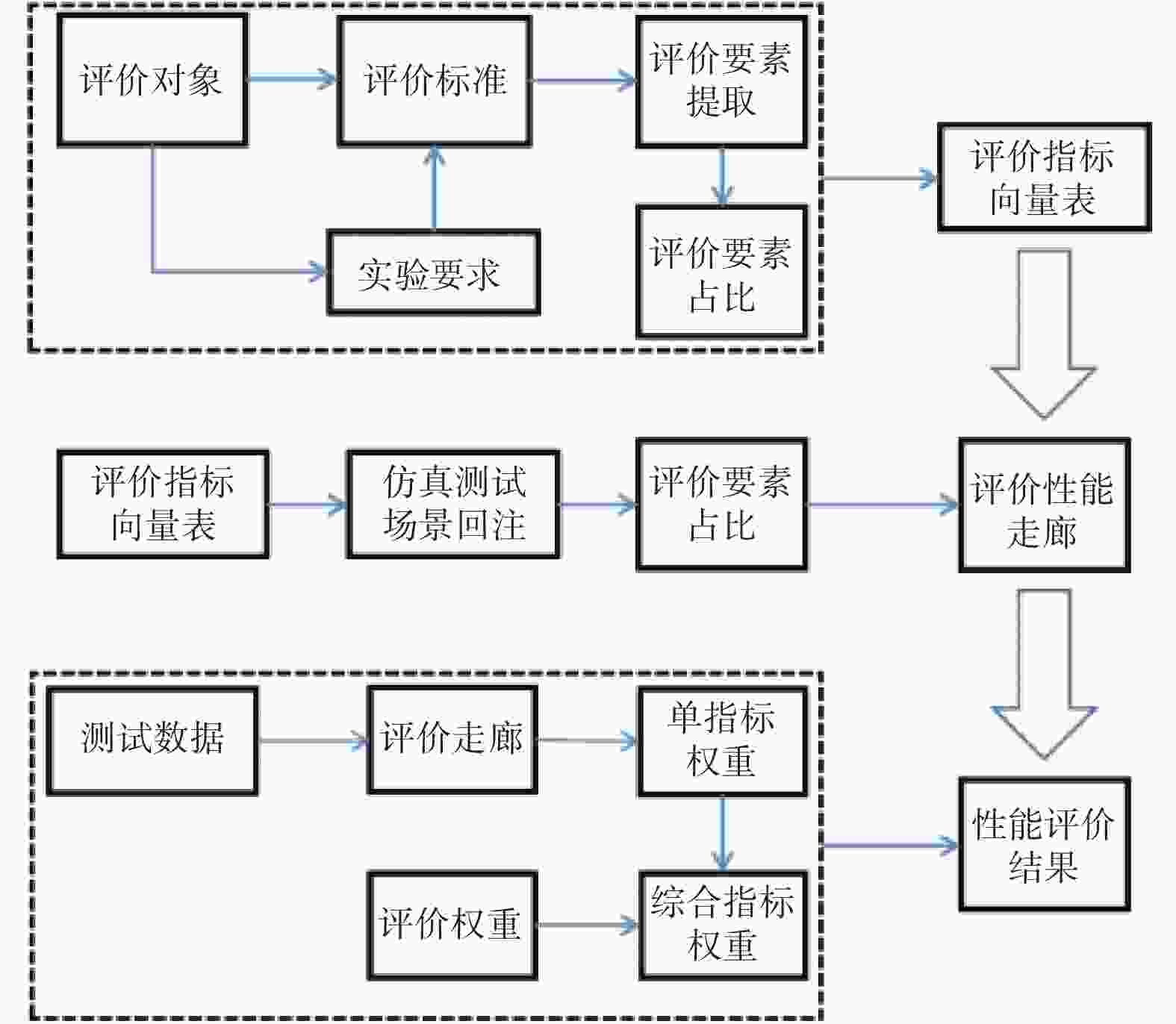
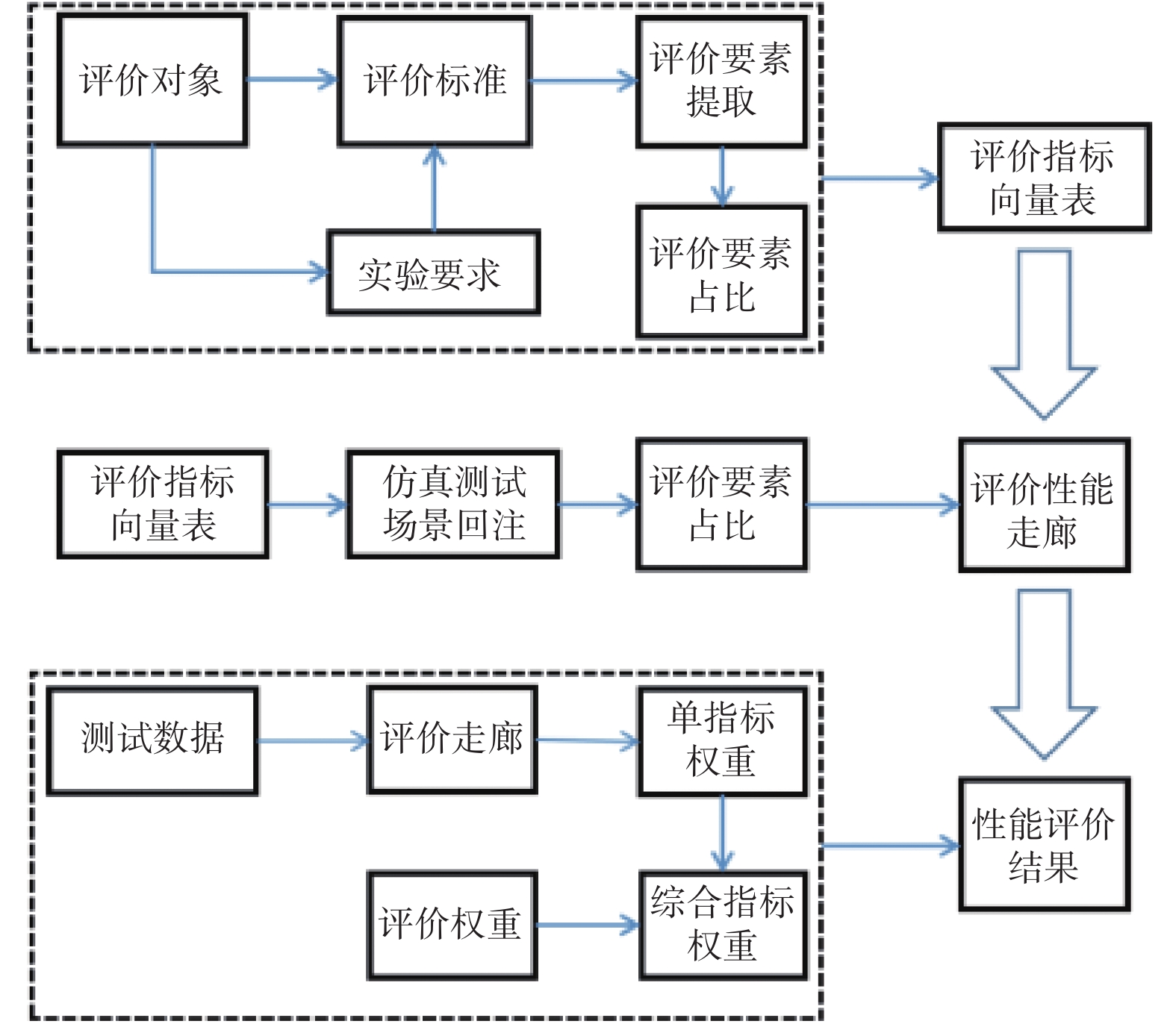
图 1 基于QMU的数据回注系统评价流程
Figure 1. QMU-based evaluation process for a data reinjection system
表 1 重要程度量化表
Table 1. Importance quantification table
rk 说明 1.0 指标$ {X}_{n-1} $比$ {X}_{n} $同样重要 1.2 $ {\text{指标}X}_{n-1} $比$ {X}_{n} $稍微重要 1.4 $ {\text{指标}X}_{n-1} $比$ {X}_{n} $明显重要 1.6 $ {\text{指标}\mathrm{X}}_{n-1} $比$ {\mathrm{X}}_{n} $强烈重要 1.8 $ {\text{指标}\mathrm{X}}_{n-1} $比$ {\mathrm{X}}_{n} $极端重要  下载: 导出CSV
表 2 测试用例说明表
Table 2. Test case description
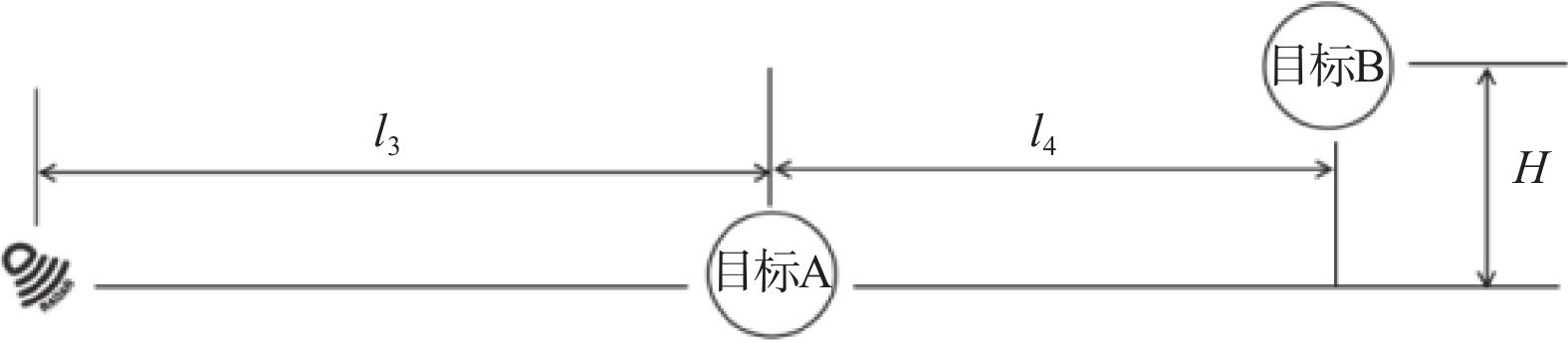
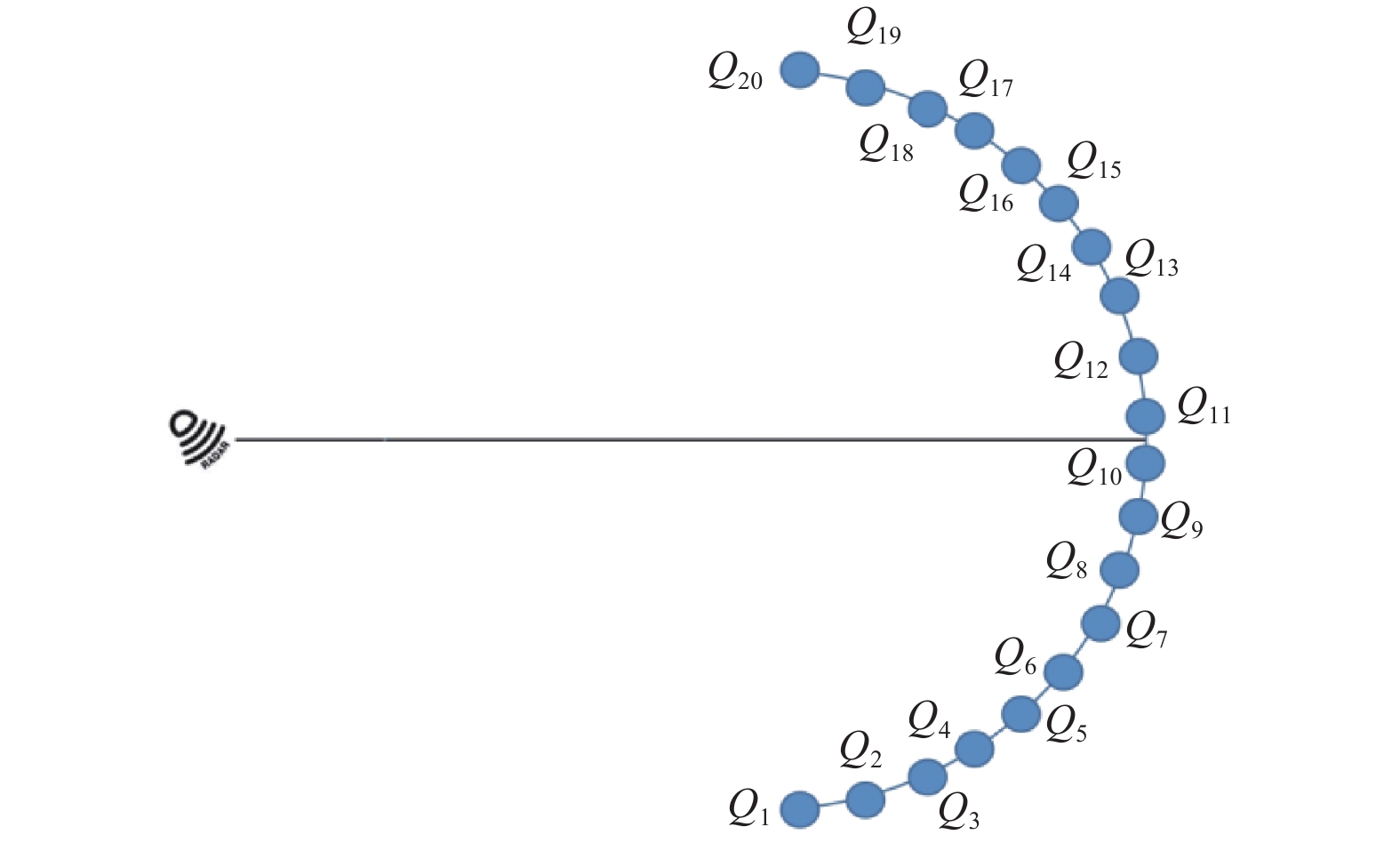
传感器类别 测试细目 具体测试场景 毫米波雷达 距离分辨力测试 $ {l}_{3} $=30 m,$ {l}_{4} $=80 m 角度分辨力测试 $ \Delta {\theta }_{i} $=0.1×180° 速度分辨力测试 $ \Delta {s}_{i} $=1 m/s 激光雷达 高程误差测试 点云高程误差计算 平面误差测试 点云平面误差计算
下载: 导出CSV
表 3 毫米波雷达评价指标清单
Table 3. List of evaluation indicators for millimeter-wave radar
评价指标 精度 权重 DCamTB ± 0.075 m 0.373 $ {\theta }_{\text{CamTB}} $ ± 0.5° 0.266 vCamTB ± 0.2 m/s 0.222
下载: 导出CSV
表 4 毫米波雷达评价指标结果表
Table 4. Results of millimeter-wave radar evaluation indexes
评价指标 性能上下界 测试数据 评价裕度 不确定度 评价特性值 $ {D}_{\text{CamTB}} $/m [ 0.0357 ,0.0469 ][ 0.0381 ,0.0422 ]0.0045 0.0021 2.1429 $ {\theta }_{{\mathrm{CamTB}}} $/(°) [0.107, 0.180] [0.120, 0.169] 0.0375 0.0245 1.5306 $ {v}_{\text{CamTB}} $/(m·s−1) [0.040, 0.530] [0.070, 0.422] 0.2060 0.1760 1.1705
下载: 导出CSV
表 5 激光雷达评价指标结果表
Table 5. Results of LiDAR evaluation index
评价指标 权重 性能上下界 测试数据 评价裕度 不确定度 评价特性值 $ {d}_{\max}\text{/m} $ 0.380 [ 0.0171 ,0.0224 ][ 0.0188 ,0.0206 ]0.0026 0.0009 2.890 $ {d}_{XY\max}\text{/m} $ 0.684 [ 0.0152 ,0.0167 ][ 0.0150 ,0.0171 ]0.0009 0.0019 0.450 $ {d}_{X\max}\text{/m} $ 0.821 [ 0.0147 ,0.0192 ][ 0.0148 ,0.0179 ]0.0017 0.0016 1.063 $ {d}_{Y\max}\text{/m} $ 0.821 [ 0.0166 ,0.0211 ][ 0.0159 ,0.0199 ]0.0013 0.0020 0.650
下载: 导出CSV
-
[1] Ibarguengoytia P H, Sucar L E, Vadera S. Real time intelligent sensor validation[J] . IEEE Power Engineering Review, 2001, 21(9): 63 − 64. doi: 10.1109/59.962425 [2] Zhang J, Ren F Y, Gao S, et al. Dynamic routing for data integrity and delay differentiated services in wireless sensor networks[J] . IEEE Transactions on Mobile Computing, 2015, 14(2): 328 − 343. doi: 10.1109/TMC.2014.2313576 [3] Natan O, Miura J. Towards compact autonomous driving perception with balanced learning and multi-sensor fusion[J] . IEEE Transactions on Intelligent Transportation Systems, 2022, 23(9): 16249 − 16266. [4] Braun H, Gerke M, Marchthaler R. Safety in autonomous driving-evaluation by maximum entropy[J] . ATZ Worldwide, 2021, 123(3): 62 − 67. [5] Son T D, Bhave A, Van der Auweraer H. Simulation-based testing framework for autonomous driving development[C] //2019 IEEE International Conference on Mechatronics. Ilmenau: IEEE, 2019: 576 − 583. [6] Chen Y, Chen S T, Xiao T, et al. Mixed test environment-based vehicle-in-the-loop validation-a new testing approach for autonomous vehicles[C] //2020 IEEE Intelligent Vehicles Symposium. Las Vegas: IEEE, 2020: 1283 − 1289. [7] Magosi Z F, Wellershaus C, Tihanyi V R, et al. Evaluation methodology for physical radar perception sensor models based on on-road measurements for the testing and validation of automated driving[J] . Energies, 2022, 15(7): 2545. [8] 陈君毅, 李如冰, 邢星宇, 等. 自动驾驶车辆智能性评价研究综述[J] . 同济大学学报(自然科学版), 2019, 47(12): 1785 − 1790, 1824. [9] 朱冰, 张培兴, 赵健, 等. 基于场景的自动驾驶汽车虚拟测试研究进展[J] . 中国公路学报, 2019, 32(6): 1 − 19. [10] 魏子茹, 卢延辉, 王鹏宇, 等. 基于CRITIC法的灰色关联理论在无人驾驶车辆测试评价中的应用[J] . 机械工程学报, 2021, 57(12): 99 − 108. [11] 李茹, 马育林, 田欢, 等. 基于熵值和G1法的自动驾驶车辆综合智能定量评价[J] . 汽车工程, 2020, 42(10): 1327 − 1334. [12] 李威. 面向智能驾驶的交通场景理解方法研究[D] . 长春: 吉林大学, 2021. [13] Hu S C, Fan H W, Gao B, et al. An image-based approach of task-driven driving scene categorization[PP/OL] . V1. (2021-03-10)[2024-06-18] . https://doi.org/10.48550/arXiv.2103.05920. [14] Wallstrom T C. Quantification of margins and uncertainties: a probabilistic framework[J] . Reliability Engineering & System Safety, 2011, 96(9): 1053 − 1062. doi: 10.1016/j.ress.2011.01.001 [15] 林国庆, 逯超, 韩龙飞, 等. 汽车自动紧急制动系统行人测试与评价方法[J] . 汽车安全与节能学报, 2020, 11(3): 296 − 304. -

 下载:
下载:

 点击查看大图
计量
- 文章访问数: 189
- HTML全文浏览量: 109
- PDF下载量: 39
- 被引次数: 0
